
The Attention War Has Changed
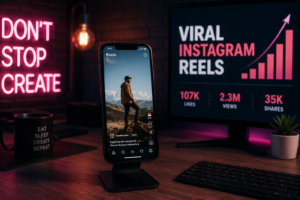 Over the last few years, social media content became a battle for attention.
Creators filled videos with rapid cuts, oversized captions, loud sound effects, constant transitions, and endless visual stimulation — all designed to stop viewers from scrolling for just a few seconds.
For a while, it worked.
Fast-paced editing dominated platforms like TikTok and Instagram Reels because audiences were consuming content at an unprecedented speed. Retention became the most valuable currency in digital marketing, and creators optimized every second of their videos to fight for attention.
But in 2026, the landscape is beginning to shift.
Audiences are becoming increasingly desensitized to overstimulating content. Endless flashy edits and aggressive attention tactics no longer create the same emotional impact they once did. Instead, viewers are starting to gravitate toward content that feels more immersive, intentional, emotional, and cinematic.
This is where cinematic reels are changing the future of digital marketing.
Rather than overwhelming the viewer with constant stimulation, cinematic reels focus on storytelling, atmosphere, pacing, sound design, emotional tension, and visual identity. They feel less like advertisements and more like short cinematic experiences designed specifically for the modern attention economy.
At Neo Media, we believe the future of marketing belongs to brands that can combine retention psychology with emotional storytelling — creating content that not only captures attention, but actually holds it.
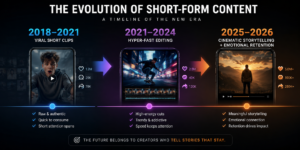
The Death of Hyper-Stimulation in Content
For years, short-form content evolved around one core objective: stopping the scroll at any cost.
Creators optimized videos with aggressive editing techniques designed to maximize retention. Every second became engineered for stimulation — fast cuts, constant zooms, subtitles, loud sound effects, visual effects, transitions, and rapid pacing all competing for the viewer’s attention.
This editing style exploded during the rise of TikTok and early Instagram Reels because platforms rewarded watch time and retention above everything else.
As a result, creators entered an endless attention war.
The faster the edits became, the shorter audience attention spans started feeling. Content consumption turned into rapid-fire stimulation, where viewers scrolled through hundreds of videos within minutes.
But over time, something started changing.
Audiences became increasingly desensitized to overstimulating content. The same editing tricks that once felt engaging slowly became predictable, repetitive, and emotionally empty.
Viewers were no longer impressed by constant movement alone.
They started craving something different:
- atmosphere
- emotion
- pacing
- storytelling
- visual immersion
This shift is one of the biggest reasons cinematic reels are beginning to outperform traditional short-form editing styles in 2026.
Rather than relying entirely on hyperactive stimulation, cinematic reels create emotional retention. They slow the viewer down instead of constantly attacking their attention.
And ironically, that slower and more intentional style is becoming more powerful in a world overwhelmed by noise.
| Hyper-Stimulating Content | Cinematic Reels |
|---|---|
| Fast cuts every second | Controlled pacing |
| Overloaded effects | Visual simplicity |
| Retention through stimulation | Retention through emotion |
| Loud editing style | Atmospheric storytelling |
| Short-term engagement | Deeper audience connection |
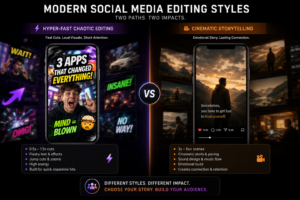
Why Cinematic Storytelling Creates Stronger Audience Retention
Modern audiences do not just consume content anymore — they experience it.
This is one of the biggest reasons cinematic reels are becoming so effective in digital marketing. Instead of overwhelming viewers with nonstop stimulation, cinematic storytelling creates emotional immersion.
And emotion is what makes content memorable.
While hyper-fast editing focuses on keeping attention moment by moment, cinematic reels focus on building atmosphere, tension, curiosity, and emotional connection throughout the viewing experience.
This creates a completely different type of retention.
Traditional short-form content often relies on rapid stimulation to prevent viewers from scrolling away. Cinematic reels, however, slow the audience down and make them emotionally invest in what they are watching.
That difference is critical.
Because viewers may watch stimulating content…
but they remember emotional content.
The most effective cinematic reels combine:
- visual storytelling
- controlled pacing
- sound design
- emotional framing
- cinematic composition
- narrative tension
to create content that feels immersive rather than disposable.
This is why many modern creators and premium brands are beginning to move away from purely chaotic editing styles and toward more intentional cinematic experiences.
In 2026, attention alone is no longer enough.
The real goal is emotional retention.
The 5 Elements of High-Retention Cinematic Reels
| Element | Purpose |
|---|---|
| Strong Opening Shot | Immediately creates curiosity |
| Controlled Pacing | Prevents viewer fatigue |
| Sound Design | Builds emotional immersion |
| Narrative Tension | Keeps viewers watching |
| Emotional Payoff | Makes content memorable |
Fast editing captures attention. Cinematic storytelling creates emotional memory.
The Psychology Bhind Emotional Retention
Audiences rarely remember advertisements because of information alone.
They remember how the content made them feel.
This is why cinematic storytelling has become so powerful in modern marketing. Emotional visuals, immersive sound design, pacing, and atmosphere activate stronger psychological engagement than purely informational content.
Instead of forcing attention through constant stimulation, cinematic reels create curiosity and emotional investment naturally.
That emotional connection increases:
- watch time
- audience recall
- shareability
- brand perception
- long-term engagement
In many cases, viewers may forget the exact product being advertised — but still remember the feeling the content created.
And in branding, that emotional memory is incredibly valuable.
How Brands Like Nike and Apple Use Cinematic Advertising
Some of the world’s most successful brands understood emotional storytelling long before cinematic reels became mainstream.
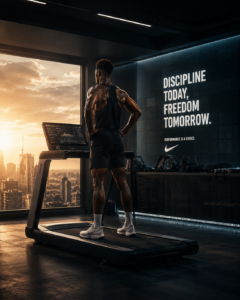
Brands like Nike and Apple rarely rely on traditional “hard-sell” advertising anymore. Instead of aggressively pushing products, they focus on creating emotional experiences that audiences connect with psychologically.
Their advertisements feel closer to short films than traditional commercials.
This approach has become increasingly effective in the modern attention economy because audiences are no longer emotionally responsive to generic promotional content. They respond to identity, aspiration, atmosphere, and storytelling.
Nike, for example, often builds advertisements around:
- struggle
- ambition
- discipline
- self-identity
- emotional transformation
The product itself is rarely the emotional center of the advertisement.
The story is.
Apple uses a similar strategy through:
- minimalist cinematic visuals
- emotional pacing
- immersive sound design
- human-centered storytelling
- premium visual composition
Rather than overwhelming viewers with information, these brands create emotional environments that shape perception subconsciously.
And this is exactly why cinematic storytelling performs so well on platforms like Instagram Reels today.
Modern audiences are increasingly drawn toward content that feels emotionally immersive rather than commercially aggressive.
The most effective cinematic reels do not feel like advertisements at all.
They feel like experiences.
Traditional Advertising vs Cinematic Brand Storytelling
| Traditional Advertising | Cinematic Advertising |
|---|---|
| Product-focused | Emotion-focused |
| Sales messaging | Storytelling |
| Information-heavy | Experience-driven |
| Immediate conversion | Long-term brand memory |
| Interrupts the viewer | Immerses the viewer |
Why This Works on Social Media
Social media platforms are no longer purely communication platforms.
They have become entertainment ecosystems.
This changes how advertising works completely.
Audiences scrolling through Instagram Reels or TikTok are not actively searching for advertisements. They are searching for stimulation, emotion, identity, entertainment, and experiences.
Cinematic reels blend naturally into this environment because they feel native to the platform rather than interruptive.
That native emotional immersion is what gives cinematic storytelling a major advantage over traditional advertising formats in 2026.
The best modern advertisements no longer feel like advertisements.
How AI Is Accelerating Cinematic Content Creation
For years, cinematic advertising was limited mainly to large brands with massive production budgets.
High-end cameras, professional editing teams, complex visual effects, expensive shoots, and long production timelines made cinematic storytelling difficult for smaller creators and businesses to compete with.
Artificial intelligence is rapidly changing that.
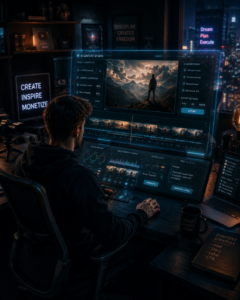
In 2026, creators and brands can now produce cinematic-quality content faster than ever using AI-powered creative tools. What once required large production teams can increasingly be achieved by smaller creators with the right combination of storytelling, editing, and AI assistance.
This shift is fundamentally changing digital marketing.
AI tools are now helping creators:
- generate video concepts
- write scripts
- automate editing workflows
- create visual assets
- improve sound design
- generate cinematic imagery
- optimize content faster
As a result, cinematic content creation is becoming more accessible, scalable, and efficient.
But the most important change is not speed alone.
It is creative freedom.
Creators can now spend less time handling repetitive production tasks and more time focusing on storytelling, emotion, pacing, and audience experience.
This is one of the biggest reasons cinematic reels are becoming increasingly common across modern social media platforms.
AI is not replacing creativity.
It is removing friction from the creative process.
And the creators who combine AI efficiency with strong storytelling skills are likely to dominate the future of digital marketing.
Traditional Production vs AI-Assisted Production
| Traditional Workflow | AI-Assisted Workflow |
|---|---|
| Large production teams | Smaller creator teams |
| Expensive shoots | Lower production costs |
| Long editing timelines | Faster content creation |
| Manual repetitive work | AI-assisted workflows |
| High entry barriers | Greater accessibility |
The Rise of AI-Powered Creators
One of the biggest shifts in modern digital marketing is the rise of AI-assisted creators.
Small creators and emerging agencies now have access to creative capabilities that were previously available only to major production studios.
AI-powered tools are helping creators compete through:
- faster experimentation
- rapid content iteration
- automated editing assistance
- scalable visual production
- personalized storytelling
This is dramatically lowering the barrier to entry in cinematic content creation.
As a result, creativity and storytelling are becoming more important than raw production budgets alone.
And in many cases, smaller creators with strong storytelling skills are outperforming larger brands that still rely on outdated advertising approaches.
In 2026, creative execution matters more than production size.
What Brands Must Do to Win Attention in 2026
The attention economy is evolving rapidly, and brands that continue relying on outdated advertising strategies are likely to struggle in the coming years.
Modern audiences are no longer impressed by aggressive promotion, generic graphics, or repetitive content designed purely for algorithms.
Attention today is earned through emotional relevance, storytelling, visual identity, and immersive experiences.
This is why cinematic reels are becoming one of the most powerful formats in modern digital marketing.
In 2026, brands must stop thinking like advertisers and start thinking like storytellers.
The brands winning attention today are creating content that:
- feels emotionally engaging
- looks visually immersive
- blends naturally into social media platforms
- creates identity and aspiration
- holds attention without forcing it
Simply producing more content is no longer enough.
The real competitive advantage now comes from creating content people actually want to watch.
What Modern Brands Need to Prioritize
| Outdated Strategy | Modern Winning Strategy |
|---|---|
| Posting for quantity | Posting for emotional impact |
| Generic marketing visuals | Cinematic storytelling |
| Attention through noise | Attention through immersion |
| Pure promotion | Audience experience |
| Short-term virality | Long-term brand connection
|
The Future Belongs to Emotionally Intelligent Brands
As AI continues automating more areas of content production, creativity itself becomes even more valuable.
The brands that succeed in the future will not necessarily be the ones producing the most content.
They will be the ones producing the most emotionally resonant content.
This is where cinematic storytelling becomes incredibly powerful.
Because in a world overwhelmed by information, emotion becomes the strongest differentiator.
Brands that understand pacing, atmosphere, storytelling, sound design, and audience psychology will have a major advantage in the modern attention economy.
The future of marketing belongs to brands that can combine AI efficiency with human emotion.
Conclusion
The rise of cinematic reels represents more than just an editing trend.
It reflects a larger shift in how audiences consume content, connect emotionally with brands, and engage with digital experiences in the modern attention economy.
For years, creators competed through faster edits, louder visuals, and increasingly aggressive attempts to capture attention. But as audiences become more overstimulated and desensitized, emotional storytelling is beginning to outperform pure stimulation.
This is why cinematic content is becoming one of the most important creative directions in digital marketing today.
Brands are no longer competing only for visibility.
They are competing for emotional connection, memory, and audience trust.
And in 2026, the brands that understand cinematic storytelling, emotional retention, and AI-powered creativity will likely define the future of modern advertising.
At Neo Media, we believe the future of digital marketing lies at the intersection of cinematic storytelling, audience psychology, and AI-powered creativity.
As content continues evolving, brands that adapt to this new attention economy will have the greatest opportunity to stand out, build emotional connection, and create lasting impact.